

Introduction
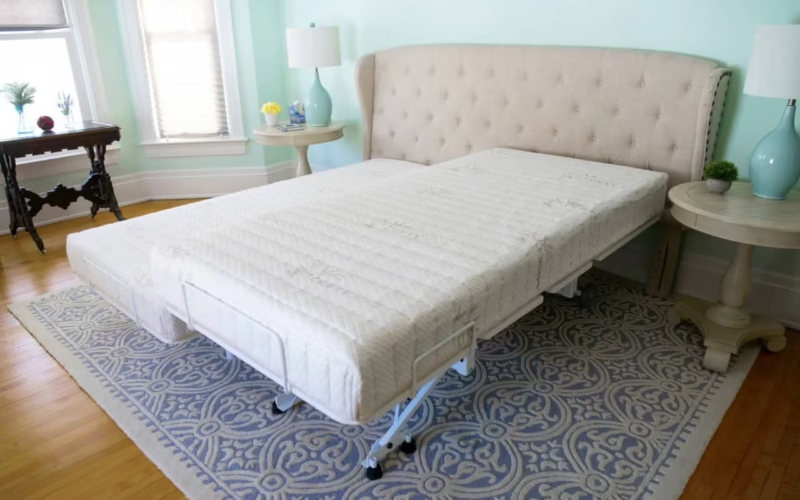
Providing proper support for individuals with limited mobility requires the right equipment. In many home care and healthcare environments, a transfer master bed plays an important role in improving safety, comfort, and daily care routines. These beds are designed to help patients move more easily while also assisting caregivers during transfers and repositioning.
As patient care needs continue to evolve, modern transfer beds are becoming more advanced and user-friendly. If you are considering a transfer master bed in 2026, understanding the most important features can help you choose a model that meets both patient and caregiver needs.
Adjustable Height for Easier Transfers
One of the most important features of a transfer master bed is adjustable height. Being able to raise or lower the bed makes it easier for patients to move between the bed and other equipment such as wheelchairs, recliners, or mobility aids.
Lowering the bed allows patients to place their feet on the floor more comfortably when getting up, while raising it can make it easier for caregivers to assist with transfers. This flexibility helps create a safer and more efficient caregiving environment.
Multiple Positioning Options
Comfort and positioning are essential for patients who spend extended time in bed. Many transfer master beds allow independent adjustments for the head and foot sections. This feature allows patients to sit up, elevate their legs, or change their resting position throughout the day.
These adjustments can help patients feel more comfortable during daily activities like eating, reading, or watching television. Proper positioning can also support better posture and overall comfort during long periods of rest.
Durable and Stable Construction
Because transfer beds are used frequently for patient movement, durability is a critical factor. A strong frame provides stability when patients are getting in or out of bed. Stability is especially important during transfers because it helps prevent sudden shifts or imbalance.
In 2026, many modern transfer beds are designed with reinforced frames and reliable lifting mechanisms that can support regular use in both home and professional care settings.
Easy-to-Use Controls
Technology has made many healthcare devices easier to operate, and transfer master beds are no exception. Most modern beds include simple control systems that allow adjustments to be made quickly and smoothly.
Handheld remotes or control panels make it easier for caregivers to change the bed’s position without complicated steps. In some cases, patients can also use these controls themselves, allowing them to adjust their position for greater comfort and independence.
Smooth and Quiet Adjustment Mechanisms
A good transfer master bed should operate smoothly without sudden movements. Quiet motors and smooth adjustment mechanisms help maintain a calm environment, especially in home care settings where patients may rest or sleep during the day.
Smooth adjustments also allow caregivers to reposition patients gently without causing unnecessary discomfort.
Compatibility with Mobility Equipment
Another important feature to consider is how well the bed works with other mobility equipment. Many patients rely on wheelchairs, lift chairs, or transfer aids during daily care routines.
A transfer master bed that aligns easily with these devices helps create safer transfers. Proper alignment reduces the amount of lifting required and helps patients move more securely between surfaces.
Comfort and Mattress Support
While the bed frame itself is important, mattress compatibility also plays a key role in patient comfort. Many transfer beds are designed to work with specialized mattresses that support pressure relief and proper positioning.
Selecting a bed that works well with supportive mattress systems can help improve long-term comfort for patients who spend extended periods in bed.
Safety Features for Patient Protection
Safety should always be a top priority in patient care equipment. Modern transfer master beds often include safety-focused features designed to protect both patients and caregivers.
These may include stable frames, controlled lifting mechanisms, and secure positioning options. Together, these features help reduce the risk of accidental falls or sudden movement during transfers.
Ease of Use for Caregivers
Caregiving often involves repetitive physical tasks such as repositioning or assisting patients with movement. A well-designed transfer master bed helps reduce some of the strain associated with these tasks.
Adjustable height settings, stable positioning, and easy controls allow caregivers to work more comfortably. This can help make daily care routines more efficient while supporting safer patient handling.
Choosing the Right Bed for Your Needs
When selecting a transfer master bed, it is important to consider the specific needs of the patient as well as the care environment. Some patients may require frequent transfers throughout the day, while others may primarily need improved comfort and positioning.
Taking time to evaluate features such as adjustability, durability, ease of use, and compatibility with other equipment can help ensure the bed meets long-term care requirements.
Conclusion
Transfer master beds are an essential part of many modern caregiving environments. By supporting safer transfers, improving patient comfort, and reducing caregiver strain, these beds help create a more supportive daily care routine.
In 2026, the best transfer master beds combine adjustable height, flexible positioning, durable construction, and easy-to-use controls. Choosing a bed with these features can make a meaningful difference in both patient comfort and caregiving efficiency.
With the right equipment in place, patients can experience safer movement and better support, while caregivers can perform their responsibilities with greater confidence and ease.
