

Most attorneys didn’t go to law school to learn marketing. They went to argue cases, draft contracts, defend clients, and build a reputation based on results—not funnels, clicks, or conversion rates.
So when someone says “you need a marketing funnel,” it can sound like jargon from another planet.
But here’s the reality: you already have a funnel. It’s just probably not working as well as it could.
A legal marketing funnel is not a gimmick or a tech trick. It’s simply the structured path a potential client takes—from first hearing about you to actually hiring you. In many cases, this is exactly what professional law firm lead generation services are designed to optimize behind the scenes. When it’s done right, it quietly brings in cases without you having to constantly “sell” yourself. Let’s break it down in plain language, with zero fluff.
1. What a Marketing Funnel Actually Means (No Jargon Version)
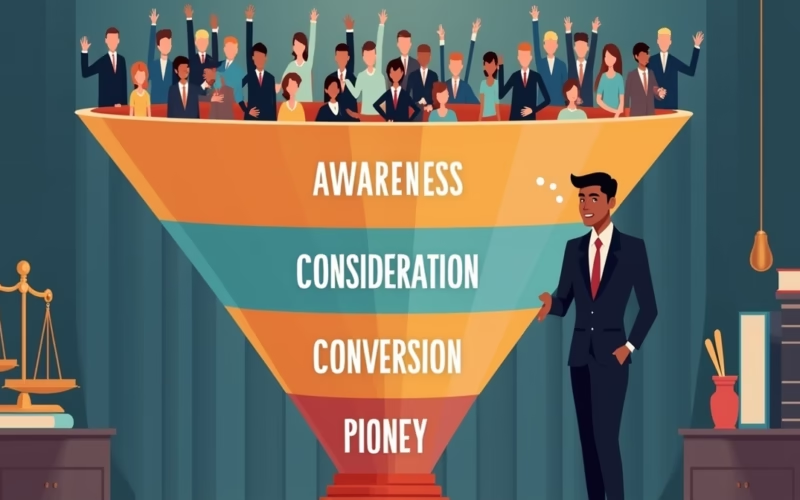
A funnel is just a way to describe how strangers become clients.
Think of it in three simple stages:
1. Awareness – Someone discovers you exist
2. Consideration – They start evaluating you
3. Conversion – They decide to contact and hire you
That’s it. No complicated software required to understand the concept.
For attorneys, this might look like:
- A person searches “divorce lawyer near me”
- They find your website or Google listing
- They read reviews, your bio, your case experience
- They call your office or fill out a form
- You consult, and ideally they sign
That path is your funnel. Whether you designed it or not.
The difference between struggling firms and thriving ones is simple: successful firms intentionally design each step.
2. Why Most Attorneys Hate Marketing (and Why That Matters)
Let’s be honest—most legal professionals dislike marketing for a few common reasons:
- It feels pushy or sales-driven
- It’s time-consuming and distracting
- It’s filled with unfamiliar tech language
- It often attracts low-quality leads when done poorly
So many attorneys either avoid marketing entirely or delegate it without understanding it.
The problem is not marketing itself. It’s unstructured marketing.
Without a funnel, marketing becomes random:
- A few Google Ads here
- A website update there
- Occasional social media posts
- Word-of-mouth when it happens
That randomness leads to unpredictable client flow. Some months are busy, others are quiet.
A funnel fixes that by turning marketing into a system instead of scattered effort.
3. The Three Layers of a Legal Funnel
Let’s translate the funnel into something practical for law firms.
Stage 1: Getting Attention (Top of Funnel)
This is where strangers first discover you.
Common channels:
- Google search (SEO)
- Paid ads (Google Ads)
- Social media content
- Legal directories
- Referrals that land on your website
At this stage, people are not ready to hire. They are just exploring.
Example mindset:
“I think I need a lawyer… who’s good in my area?”
Your job here is not to convince them immediately. It’s to exist where they are searching.
Most law firms fail here by either:
- Not ranking on search engines
- Having weak online presence
- Using outdated or generic websites
If people can’t find you, nothing else matters.
Stage 2: Building Trust (Middle of Funnel)
Once someone finds you, they start evaluating.
This is where most attorneys unknowingly lose cases.
Potential clients are thinking:
- Are you experienced in my type of case?
- Do you seem trustworthy?
- Do you have good reviews?
- Do you explain things clearly?
- Will you actually care about my situation?
At this stage, your marketing assets matter more than ads:
- Website clarity
- Case results or experience descriptions
- Testimonials and reviews
- Attorney profile and tone
- Educational content (blogs, FAQs)
If your website feels confusing or generic, people leave—even if your legal skills are excellent.
Remember: clients don’t evaluate like lawyers. They evaluate like anxious humans trying to avoid risk.
Trust wins cases before you even speak to them.
Stage 3: Conversion (Bottom of Funnel)
This is where leads become clients.
The key question here is simple:
How easy is it for someone to contact you and feel confident doing it?
Conversion elements include:
- Clear call-to-action (“Call now” or “Book consultation”)
- Fast response time
- Simple contact forms
- Friendly intake process
- Availability messaging
One of the most overlooked factors is speed.
A potential client usually contacts multiple lawyers. The first one to respond professionally often wins.
Even a 30–60 minute delay can reduce your chances significantly.
4. The Real Problem: Broken Funnels in Law Firms
Most law firms don’t fail because they lack traffic. They fail because their funnel leaks.
Here’s what that looks like:
- Lots of website visitors, few calls
- Plenty of inquiries, low conversion rate
- Good reputation, but inconsistent leads
- Strong referrals, but no scalable growth
These leaks usually happen at specific points:
Leak 1: Weak First Impression
Old websites, unclear messaging, or no specialization.
Leak 2: Low Trust Signals
Few reviews, no case explanations, or generic content.
Leak 3: Poor Follow-Up
Leads are not contacted quickly or consistently.
Leak 4: Confusing Intake Process
Too many steps, unclear pricing expectations, or delayed responses.
Fixing even one of these can significantly improve client intake.
5. Why You Don’t Need to “Love Marketing” to Win at It
Here’s an important shift in thinking:
You don’t need to enjoy marketing. You need to systemize it.
A well-built funnel does the heavy lifting:
- It attracts the right people automatically
- It educates them before you speak to them
- It filters out low-quality inquiries
- It brings warmer, more serious clients to your desk
That means less time convincing, and more time practicing law.
Think of it like this:
- You don’t personally “enjoy” billing systems
- But you still use them because they run the business
Marketing funnels are the same—just applied to client acquisition.
6. What a Simple, Effective Legal Funnel Looks Like
Let’s map a practical version of a working funnel:
Step 1: Visibility
People find you through:
- Search engines
- Local listings
- Paid ads
- Referrals
Step 2: Landing Point
They land on:
- Your website
- A dedicated practice area page
- A consultation page
Step 3: Trust Building
They see:
- Clear explanation of services
- Case experience
- Client testimonials
- Simple language, not legal jargon
Step 4: Action
They:
- Call your office
- Submit a form
- Book a consultation
Step 5: Follow-Up
Your team:
- Responds quickly
- Answers basic questions
- Schedules consultation
- Tracks outcome
That’s a complete funnel. No complex systems required.
7. The Hidden Advantage: Funnels Improve Case Quality
One overlooked benefit of a well-designed funnel is better clients.
When your messaging is clear and educational:
- People understand what you specialize in
- They self-select more accurately
- You get fewer irrelevant inquiries
- You spend less time filtering leads
In other words, good marketing doesn’t just bring more clients—it brings better ones.
8. Common Mistakes Attorneys Make with Funnels
Let’s address a few traps:
Mistake 1: Trying to Target Everyone
General messaging like “We handle all legal matters” reduces trust.
Mistake 2: Overcomplicating Technology
You don’t need 10 tools to start. You need clarity and consistency.
Mistake 3: Ignoring Follow-Up
Many firms lose leads simply because no one responds fast enough.
Mistake 4: Writing Like a Law Book
Clients don’t want statutes. They want understanding.
Mistake 5: Treating Marketing as One-Time Work
Funnels require maintenance, not constant reinvention.
9. How to Make This Work Without Becoming a “Marketer”
If you want a practical way to think about it, focus on just three questions:
- Can people find me easily?
- Do they trust me when they do?
- Is it easy to contact me?
If you improve those three areas, your funnel improves automatically.
No marketing degree required.
10. Final Thought: You Already Have a Funnel—Now Improve It
Every law firm has a funnel, whether intentional or not. The difference is:
- Some funnels are structured and consistent
- Others are accidental and unpredictable
If your current client flow feels random, it’s not because marketing is broken. It’s because the path from discovery to consultation isn’t optimized.
The good news is you don’t need to overhaul everything at once.
Start small:
- Improve your website clarity
- Strengthen your reviews
- Respond faster to inquiries
- Focus on one strong practice area message
Over time, those improvements compound into a system that quietly brings in cases.
And the best part? Once it’s built properly, it keeps working—even when you’re not thinking about marketing at all.
