

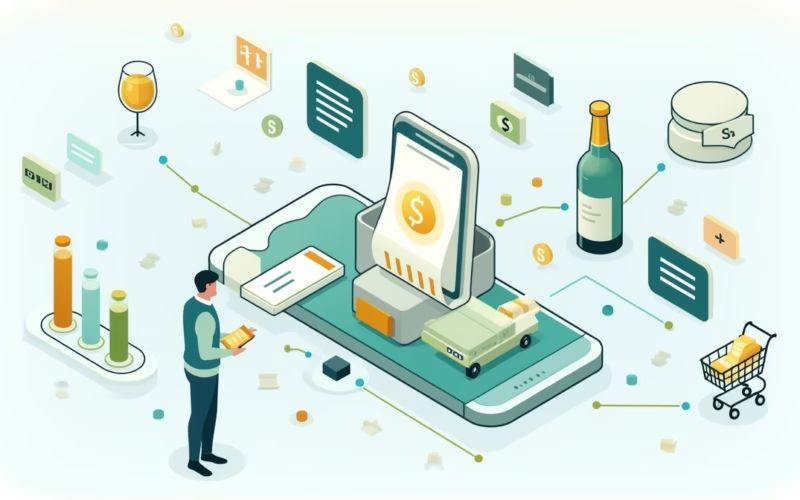
The way consumers purchase liquor is changing rapidly. Instead of visiting a physical store, customers increasingly expect to browse products online, compare prices, verify their age digitally, place an order, and receive their purchases at a convenient location. This shift has created significant opportunities for liquor retailers, entrepreneurs, and technology companies to build on-demand alcohol delivery platforms.
However, developing a liquor delivery application is more complicated than creating a standard food or grocery delivery app. Age verification, licensing, location restrictions, payment rules, inventory management, delivery compliance, and responsible-sales requirements must be incorporated into the platform from the beginning.
So, how much does it cost to develop a liquor delivery app? What features should it include? And how can such a platform generate revenue?
This guide covers the major development costs, essential features, business models, monetization strategies, and factors that influence the final investment.
What Is a Liquor Delivery App?
A liquor delivery app is an on-demand digital platform that allows customers to discover alcoholic beverages from licensed retailers, place orders, make payments, and track deliveries.
Depending on the business model, the application may operate as:
- A single-store ordering platform
- A multi-store marketplace
- A retailer-owned delivery application
- A franchise or chain-based platform
- A hybrid marketplace combining inventory from multiple sellers
A complete marketplace typically requires more than a customer-facing mobile application. Businesses looking for Best alcohol delivery app development Services should consider solutions that include a customer app, retailer or vendor panel, delivery partner app, and administrative dashboard. The complexity increases further when the platform operates across multiple cities or jurisdictions because alcohol regulations can differ significantly by location.
How Much Does It Cost to Develop a Liquor Delivery App?
The cost depends heavily on the application’s scope, number of platforms, development location, integrations, compliance requirements, and level of customization.
As an indicative 2026 benchmark, industry estimates put a single-state MVP in the roughly $14,000–$24,000 range in India, while a broader multi-role platform can reach $36,000–$66,000. Enterprise implementations with multi-state operations, advanced compliance, analytics, and larger retailer networks can exceed $90,000 and potentially reach $240,000+. These are planning estimates rather than fixed market prices; actual quotes depend on the project specification.
A practical cost structure looks like this:
| App Type | Estimated Cost | Typical Scope |
|---|---|---|
| Basic MVP | $9,000–$18,000 | Customer app, catalogue, ordering, payments, basic admin |
| Standard Platform | $18,000–$36,000 | Customer, delivery, admin, verification, tracking |
| Multi-Vendor Platform | $36,000–$66,000 | Customer, vendor, delivery, admin, marketplace capabilities |
| Enterprise Solution | $90,000–$240,000+ | Multi-city/state operations, advanced analytics, integrations, compliance |
The figures should be treated as indicative because Liquor Delivery App often require specialized compliance and third-party integrations beyond the functionality of a conventional delivery app.
Major Factors That Influence Development Cost
1. Number of Applications
A simple retailer app may only require a customer application and admin dashboard.
A marketplace usually needs four connected components:
- Customer application
- Vendor/store application
- Delivery partner application
- Admin dashboard
Developing and maintaining four interfaces naturally costs more than building a single application.
2. Platform Selection
Developing for both iOS and Android can increase the budget compared with launching on one platform.
Businesses can choose between:
- Native iOS and Android development
- Cross-platform development using technologies such as Flutter or React Native
- A web-based customer experience combined with native operational applications
Cross-platform development can reduce duplicated development work, although the appropriate architecture depends on performance, integrations, and long-term requirements.
3. UI/UX Design
A polished user experience is important because customers expect delivery applications to be fast and intuitive.
Design costs depend on the number of screens, custom branding, animations, personalization, accessibility requirements, and user flows.
A liquor platform may need separate interfaces for product discovery, age verification, checkout, delivery tracking, retailer management, and compliance workflows.
4. Compliance Infrastructure
Compliance is one of the most important cost drivers.
Unlike ordinary e-commerce applications, liquor platforms may need age verification, identity checks, delivery-zone restrictions, purchase limits, license management, audit trails, and location-specific rules.
Industry development estimates specifically identify compliance infrastructure as an additional cost compared with generic delivery platforms.
The exact requirements depend on the jurisdiction where the platform operates.
5. Third-Party Integrations
Integrations can include:
- Payment gateways
- Maps and GPS
- Identity verification providers
- SMS and email services
- Push notifications
- Cloud infrastructure
- POS systems
- Inventory management systems
- Analytics platforms
- Customer support tools
Every additional integration can increase development, testing, and maintenance requirements.
Essential Features of a Liquor Delivery App
The success of the platform depends on more than simply displaying products and accepting orders. The application should provide a smooth customer experience while giving retailers, delivery partners, and administrators the tools required to operate the business.
Customer Registration and Profile
Customers should be able to create accounts using email, phone numbers, or supported authentication methods.
The profile can contain:
- Name and contact information
- Saved addresses
- Order history
- Preferred payment methods
- Age-verification status
- Loyalty points
- Favorite products
Personalized profiles also make it easier to provide relevant recommendations and repeat-order functionality.
Age and Identity Verification
Age verification is a critical component of an alcohol delivery platform.
Depending on local laws and operating requirements, the application may support government-issued ID verification, document scanning, date-of-birth validation, OTP confirmation, and verification at delivery.
Some platforms implement multiple verification checkpoints rather than relying solely on an age gate during registration.
The precise verification method should always be designed around applicable local regulations and the requirements of the licensed retailer.
Product Catalogue
The catalogue should make it easy for customers to explore products by category.
Useful categories can include:
- Whisky
- Vodka
- Rum
- Gin
- Wine
- Beer
- Champagne
- Ready-to-drink beverages
- Premium spirits
Products can include images, descriptions, sizes, prices, availability, brand information, and other legally appropriate details.
Search and Filters
A powerful search system can help customers find products quickly.
Filters may include:
- Brand
- Beverage category
- Price
- Size
- Availability
- Store
- Customer ratings
- Region
Smart search can also suggest products as customers type.
Shopping Cart and Checkout
The checkout process should be simple while collecting all required information.
Customers should be able to:
- Select products.
- Confirm their delivery address.
- Choose a permitted delivery slot.
- Select a payment method.
- Review applicable charges.
- Confirm the order.
Any legally required restrictions should be enforced before the order is submitted.
Real-Time Order Tracking
Once an order is assigned to a delivery partner, customers should be able to view its status.
A typical workflow can show:
Order confirmed → Store preparing → Driver assigned → Picked up → On the way → Delivered
GPS-based tracking and estimated arrival times can improve transparency and reduce customer support requests.
Delivery Partner Application
The driver application is essential for managing last-mile operations.
Important capabilities include:
- Driver registration
- Identity verification
- Order acceptance
- Pickup confirmation
- Navigation
- Delivery status updates
- Customer contact
- Proof of delivery
- Age/ID verification workflow
- Earnings information
- Delivery history
For regulated products, the delivery workflow should be designed to prevent the handoff when required verification conditions are not satisfied.
Vendor or Store Panel
Retailers need their own management interface to process orders and manage products.
Important features include:
- Product management
- Inventory updates
- Order acceptance/rejection
- Pricing management
- Store hours
- Delivery-zone configuration
- Sales reports
- Order history
- Promotions
- Payout information
Real-time inventory synchronization becomes particularly important for multi-store marketplaces.
Admin Dashboard
The admin panel provides centralized control over the platform.
Administrators may manage:
- Customers
- Retailers
- Delivery partners
- Products
- Orders
- Payments
- Promotions
- Delivery zones
- Verification records
- Reports
- Customer complaints
- Platform commissions
A well-designed dashboard can significantly reduce operational workload.
Advanced Features for a Competitive Platform
Once the core product is stable, businesses can add advanced capabilities to differentiate themselves.
AI-Powered Recommendations
Recommendation engines can analyze customer behavior and suggest relevant products for Liquor Delivery App.
For example, customers who frequently purchase a particular category could receive recommendations for related products, bundles, or new arrivals.
Personalized Promotions
The platform can create targeted offers based on customer preferences and purchase behavior, subject to applicable advertising and responsible-marketing requirements.
Loyalty Programs
A loyalty system can reward customers with points for eligible purchases.
Points may potentially be exchanged for permitted benefits such as discounts, delivery incentives, or membership advantages, depending on local rules.
Subscription or Membership Plans
Businesses can introduce premium memberships offering benefits such as:
- Reduced delivery charges
- Priority delivery
- Exclusive promotions
- Early access to selected products
- Personalized recommendations
The membership structure should be reviewed for compliance with applicable alcohol-sales regulations.
Multi-Store Inventory
A marketplace can connect multiple licensed stores and display available inventory from each location.
This can improve product selection while allowing the business to expand without holding all inventory itself.
Analytics and Business Intelligence
Analytics can provide insights into:
- Best-selling products
- Average order value
- Customer retention
- Repeat purchases
- Delivery performance
- Store performance
- Cancellation rates
- Promotional performance
These insights can help operators make better decisions about pricing, inventory, marketing, and expansion.
Revenue Strategies for a Liquor Delivery Platform
Building the application is only the first step. A sustainable monetization strategy is essential for long-term growth.
1. Commission on Every Order
The marketplace can charge participating retailers a commission on completed transactions.
For example, if a store receives a ₹5,000 order and the agreed commission is 10%, the platform earns ₹500 before applicable expenses and taxes.
This model works particularly well for multi-vendor marketplaces because revenue scales with transaction volume.
2. Delivery Fees
Customers can pay a delivery fee based on factors such as distance, delivery speed, location, or order value.
Possible structures include:
- Flat delivery charge
- Distance-based fee
- Express-delivery fee
- Scheduled-delivery fee
- Free delivery above a qualifying order value
The exact pricing model should reflect local regulations and competitive conditions.
3. Membership Revenue
Premium memberships can provide recurring revenue.
For example, a platform could offer monthly or annual plans with eligible delivery benefits, loyalty rewards, or premium customer-service features.
This can also increase customer retention by giving users a reason to continue ordering through the platform.
4. Featured Store or Product Placement
Retailers or brands may pay for promotional visibility within the application where permitted.
Possible placements include:
- Featured stores
- Sponsored search results
- Promotional banners
- New-product sections
- Seasonal campaigns
Because alcohol advertising is regulated in many jurisdictions, promotional features must be designed with local advertising and responsible-marketing rules in mind.
5. Subscription-Based B2B Services
A platform can also monetize its technology by charging retailers a monthly software fee for features such as:
- Inventory management
- Order management
- Analytics
- Customer management
- Delivery management
- POS integration
This creates an additional B2B revenue stream alongside transaction commissions.
6. White-Label Solutions
Technology providers can offer customized versions of the platform to liquor retailers or chains.
Instead of operating one marketplace, the technology company earns implementation fees, licensing revenue, maintenance fees, or recurring SaaS revenue from multiple businesses.
How to Reduce Liquor App Development Costs
Businesses do not necessarily need to launch with every possible feature.
A better strategy is to develop an MVP containing the functionality necessary to validate the business model.
Start with:
- Customer registration
- Product catalogue
- Search
- Cart
- Checkout
- Required age verification
- Order management
- Basic delivery tracking
- Retailer management
- Admin dashboard
After receiving real customer feedback, advanced features such as AI recommendations, loyalty programs, advanced analytics, and multi-city operations can be introduced.
Using cross-platform technologies can also reduce duplicated development effort when both iOS and Android are required.
Another important approach is to integrate proven third-party services rather than building every supporting system from scratch. However, third-party providers must be evaluated carefully for security, reliability, regulatory compatibility, and commercial terms.
Technology Stack
A typical liquor delivery app platform may use:
- Frontend: Flutter, React Native, Swift, Kotlin, or React
- Backend: Node.js, Python, Java, or similar technologies
- Database: PostgreSQL, MySQL, MongoDB, or another suitable database
- Cloud: AWS, Google Cloud, Microsoft Azure, or another cloud provider
- Maps: GPS and mapping APIs
- Notifications: Push notification, SMS, and email services
- Payments: A gateway that supports the relevant alcohol-commerce requirements
- Analytics: Application analytics and business intelligence tools
The ideal technology stack depends on expected traffic, integrations, geographic coverage, security requirements, and development team’s expertise.
Compliance Should Be Designed Into the Product
One of the biggest mistakes entrepreneurs can make is treating compliance as an afterthought.
Alcohol regulations can vary by country, state, province, city, or licensing jurisdiction. For example, alcohol regulation is highly state-specific, so a platform’s operating model needs to be validated for the exact locations where it plans to operate.
A compliance-oriented architecture can include:
- Age verification
- Identity verification
- Delivery-zone controls
- Purchase-limit rules
- Restricted-hour controls
- License management
- Dry-day or restricted-date rules where applicable
- Delivery verification
- Compliance audit logs
Industry guidance on liquor platforms emphasizes that geographic restrictions, age verification, and auditability need to be considered at the architecture level rather than added after launch.
Legal requirements should always be confirmed with qualified local counsel and the relevant licensing authorities before launch.
Final Thoughts
A liquor delivery application can become a powerful digital channel for retailers and a scalable marketplace for entrepreneurs, but it requires considerably more planning than a conventional on-demand delivery platform.
The development investment can range from a relatively focused MVP to a large enterprise platform costing tens of lakhs or more, depending on the number of applications, compliance requirements, integrations, geographic coverage, and desired feature set.
The most important features include secure registration, age verification, product discovery, inventory management, payments, order tracking, delivery management, retailer tools, and administrative controls. Advanced capabilities such as AI recommendations, loyalty programs, subscriptions, analytics, and multi-store inventory can then be added as the business grows.
From a revenue perspective, transaction commissions, delivery fees, memberships, retailer subscriptions, promotional placements, and white-label technology services can provide multiple income streams.
The strongest approach is to start with a focused, compliance-aware MVP, validate demand in a clearly defined market, and then expand the platform based on customer behavior and operational data. This approach can control initial development costs while creating a foundation for long-term scalability.
