

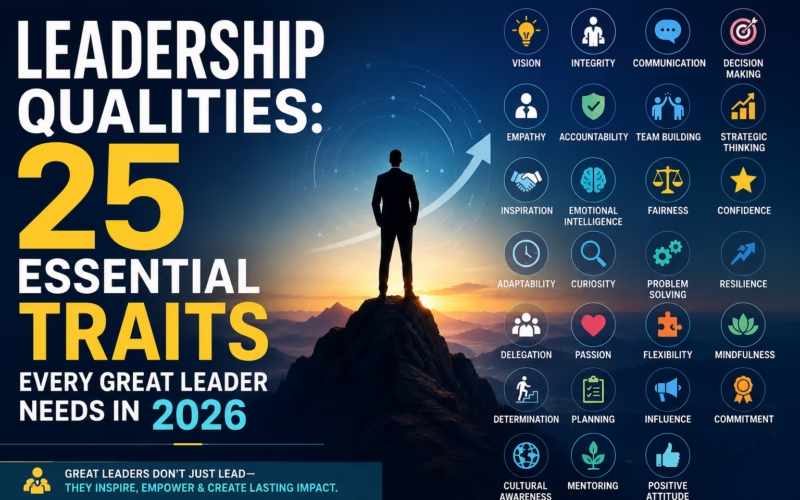
Leadership is no longer a responsibility reserved for CEOs, executives, or business owners. In today’s workplace, professionals at every level are expected to demonstrate strong leadership qualities, whether they manage a team, lead projects, or collaborate across departments. As artificial intelligence automates routine tasks, organizations are placing even greater value on uniquely human strengths such as communication, emotional intelligence, adaptability, and ethical decision-making. Recent leadership and HR research shows that employers increasingly seek candidates who can inspire others, navigate change, and foster collaboration in hybrid and AI-enabled workplaces. These qualities help build trust, improve team performance, and drive innovation in a rapidly evolving business environment. In this guide, you’ll discover the most important leadership qualities for 2026, understand why they matter, explore real-world examples, and learn practical strategies to develop the skills needed to become a more confident, influential, and effective leader in any profession.
What Are Leadership Qualities?
Leadership qualities are personal characteristics that enable individuals to inspire, guide, influence, and achieve goals with others. These qualities shape how people communicate, make decisions, solve problems, and build trust within a team. While management focuses on planning, organizing, and overseeing daily operations, leadership is about creating a vision, motivating people, and driving positive change. Every employee, regardless of job title, benefits from developing leadership qualities because they improve collaboration, accountability, and career growth. In today’s fast-changing workplace, professionals are often expected to lead projects, share ideas, and support teammates without holding formal management positions. Leadership also extends beyond the office. Personal leadership involves self-discipline, integrity, and continuous learning, while professional leadership focuses on influencing colleagues, achieving organizational goals, and creating a positive work environment where individuals and teams can succeed.
Why Leadership Qualities Matter in 2026
Leadership qualities have become more important than ever as organizations adapt to AI, hybrid work, and rapidly changing business environments. While AI improves productivity and automates routine tasks, human capabilities such as empathy, communication, ethical judgment, and collaboration remain essential for leading people effectively. Hybrid and remote teams require leaders who can build trust, maintain engagement, and foster inclusion across different locations and cultures. Strong leadership also drives innovation, helps organizations respond to crises, and enables faster, well-informed decision-making in uncertain situations. Research from SHRM highlights that organizations expect greater AI adoption while emphasizing that human leadership and workplace culture remain the foundation of long-term success. The Center for Creative Leadership and recent leadership competency studies also identify adaptability, strategic thinking, emotional intelligence, and continuous learning as critical competencies for modern leaders. Developing these leadership qualities prepares professionals to succeed in today’s AI-powered, people-centered workplace.
Leadership Qualities vs Leadership Skills
Although the terms are often used interchangeably, leadership qualities and leadership skills are not the same. Leadership qualities are personal traits that shape a leader’s behavior, mindset, and interactions with others, while leadership skills are learned abilities developed through education, training, and experience. Strong qualities create the foundation for effective leadership, whereas skills help leaders execute tasks, manage teams, and achieve business objectives.
Leadership Qualities
Leadership Skills
- Personality
- Learned
- Character
- Technical
- Values
- Experience
- Emotional Intelligence
- Project Management
- Integrity
- Strategic Planning
Leadership qualities influence how leaders inspire, communicate, build trust, and make ethical decisions. Leadership skills, such as project management, strategic planning, and delegation, improve execution and operational efficiency. The most successful professionals combine strong personal qualities with practical skills to lead confidently, solve problems effectively, and deliver consistent results.
25 Essential Leadership Qualities
1. Vision
Great leaders define a clear direction and inspire others to achieve shared goals.
2. Integrity
Honesty and ethical behavior build trust and long-term credibility.
3. Communication
Clear communication strengthens collaboration and reduces misunderstandings.
4. Emotional Intelligence
Understanding and managing emotions improves relationships and team performance.
5. Accountability
Responsible leaders own their decisions and encourage accountability across teams.
6. Adaptability
Flexibility helps leaders navigate change and embrace new opportunities.
7. Confidence
Confidence inspires trust while supporting decisive leadership.
8. Empathy
Empathy creates stronger connections and improves employee engagement.
9. Decision-Making
Effective leaders make informed and timely decisions.
10. Problem Solving
Strong analytical thinking leads to practical solutions.
11. Critical Thinking
Evaluating facts carefully improves judgment and reduces risk.
12. Resilience
Resilient leaders remain focused during challenges and setbacks.
13. Creativity
Creative thinking drives innovation and business growth.
14. Strategic Thinking
Long-term planning aligns actions with organizational goals.
15. Delegation
Delegating responsibilities empowers teams and improves productivity.
16. Team Building
Successful leaders create collaborative and high-performing teams.
17. Active Listening
Listening carefully strengthens trust and communication.
18. Conflict Resolution
Resolving disagreements fairly promotes a healthy workplace.
19. Time Management
Prioritizing tasks increases efficiency and productivity.
20. Growth Mindset
Continuous improvement helps leaders adapt and succeed.
21. Humility
Humble leaders welcome feedback and recognize others’ contributions.
22. Innovation
Encouraging new ideas keeps organizations competitive.
23. Coaching Mindset
Mentoring employees develops future leaders and strengthens teams.
24. AI Literacy
Understanding AI enables leaders to make informed technology decisions while balancing ethics and human judgment.
25. Continuous Learning
Lifelong learning helps leaders stay relevant in a rapidly evolving world. Modern leaders combine emotional intelligence with digital fluency, adaptability, and a commitment to continuous growth.
Leadership Qualities Employers Look for in 2026
Employers in 2026 are seeking professionals who combine strong leadership qualities with the ability to thrive in technology-driven workplaces. According to recent employer and recruiter research from SHRM, LinkedIn, and leadership competency studies, communication, adaptability, collaboration, and emotional intelligence remain among the most valued traits. Organizations also prioritize AI awareness, enabling leaders to use emerging technologies responsibly while making informed decisions. Problem-solving, accountability, and coaching skills are increasingly important as companies focus on employee development, innovation, and hybrid work. Leaders who balance technical knowledge with empathy, strategic thinking, and sound decision-making are better equipped to drive business success and build high-performing teams.
Leadership Learning Beyond the Workplace
Strong leadership qualities are developed through experience, feedback, and continuous learning. Beyond books and mentorship, staying informed about business trends, executive strategies, and real-world leadership challenges helps professionals sharpen their decision-making and strategic thinking. Reading interviews with successful founders, CEOs, and industry experts also provides practical lessons that can be applied in everyday leadership situations.
For professionals looking for a best business magazine, Exeleon Magazine offers insights into leadership, entrepreneurship, innovation, and emerging business trends. Regularly following credible business publications can broaden your perspective, strengthen your leadership mindset, and help you stay ahead in today’s rapidly evolving workplace.
Leadership Qualities in the Age of AI
Artificial intelligence is transforming how organizations operate, but it cannot replace the human qualities that define effective leadership. Modern leaders use AI-assisted decision-making to analyze data, improve efficiency, and support strategic planning while relying on human judgment for complex decisions. Digital transformation also requires leaders to embrace innovation, strengthen data literacy, and guide teams through change with confidence. Ethical leadership and AI governance are becoming essential to ensure responsible, transparent, and fair use of emerging technologies. At the same time, human-centered leadership remains critical for building trust, fostering collaboration, resolving conflicts, and motivating employees. AI enhances productivity and provides valuable insights, but communication, empathy, integrity, adaptability, and relationship-building continue to be the leadership qualities that inspire people and drive long-term organizational success.
How to Develop Leadership Qualities
Developing strong leadership qualities requires consistent learning and practical experience. Read leadership books to gain new perspectives, seek guidance from experienced mentors, and request constructive feedback to identify areas for improvement. Practice public speaking to build confidence and communication skills, and volunteer to lead small projects to gain real-world leadership experience. Strengthen emotional intelligence, learn effective negotiation techniques, improve decision-making through critical thinking, use AI tools responsibly to enhance productivity, and reflect regularly on your experiences to support continuous personal and professional growth.
Conclusion
As organizations embrace AI and adapt to constant technological and workplace changes, strong leadership qualities have become more valuable than ever. The most successful leaders combine emotional intelligence, ethical judgment, effective communication, adaptability, and digital fluency to inspire teams and make informed decisions. While technology can improve efficiency, it cannot replace the human ability to build trust, motivate people, and lead with empathy. The good news is that leadership is not limited to a select few. Through continuous learning, practical experience, self-awareness, and a commitment to personal growth, anyone can develop the leadership qualities needed to succeed in today’s evolving professional world.
