

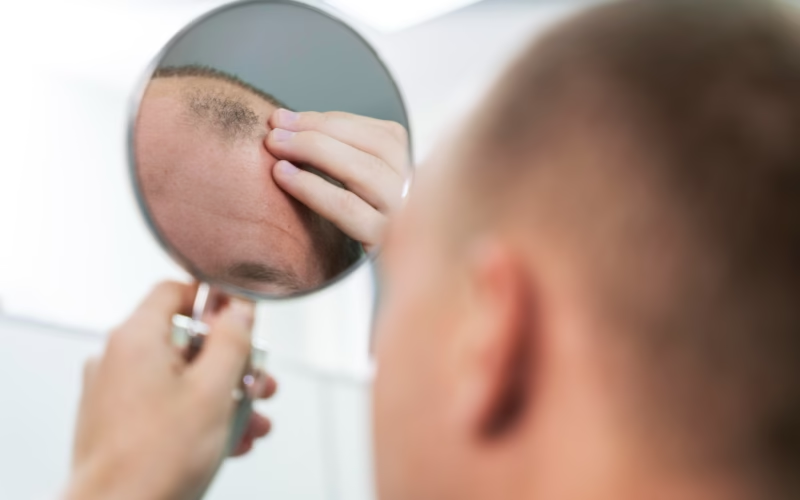
Hair loss is one of the most common concerns today, affecting men and women across all age groups. Yet, despite advancements in treatments and awareness through platforms like the Hair Research Society, most patients still fail to achieve good results.
The truth may sound harsh—but it needs to be said.
Nearly 90% of hair loss patients repeat the same six mistakes, which directly impact their outcomes. If you’re struggling with hair fall or considering a treatment, this article might change your perspective.
1. Self-Diagnosis: “It’s Genetic, Nothing Can Be Done”
In India especially, many people assume their hair loss is purely genetic.
But here’s the reality:
Only about 35% of cases are purely genetic.
Still, patients convince themselves that “it runs in the family,” and avoid proper treatment altogether. This mindset becomes the biggest barrier.
The truth: Hair loss can have multiple causes—hormonal imbalance, stress, scalp issues, nutrition deficiencies, or medical conditions.
The solution: Always consult a professional before concluding anything.
2. Product Hopping: The “Reel to Real” Trap
This is one of the most common mistakes in the digital age.
You see a reel → buy a product → use it for 2 months → quit → switch to another.
Influencers, ads, and even friends recommend random products, and patients keep jumping from one to another without consistency.
Result: No product gets enough time to show results.
Reality: Hair treatments require patience and consistency (at least 4–6 months).
3. Ignoring Scalp Health
Many people focus only on hair—but forget the foundation: the scalp.
Conditions like:
- Seborrheic dermatitis
- Psoriasis
- Fungal infections
- Sebopsoriasis
…often go unnoticed.
Instead of diagnosis, people self-medicate with anti-dandruff shampoos like ketoconazole without understanding the actual problem.
Result: Temporary relief, no long-term improvement
Solution: A healthy scalp is essential for hair growth—get it properly evaluated.
4. Delaying Treatment Until It’s Too Late
Most patients follow this pattern:
Home remedies → oils → DIY treatments → frustration → doctor (finally)
By the time they seek professional help, they’ve already lost 70–80% of their hair density.
Early intervention = better results
Late action = limited recovery options (often requiring transplant)
This is where awareness from Hair Transplant Training professionals plays a crucial role in educating patients early.
5. Starting and Stopping Treatment Repeatedly
Hair treatment is not a short-term commitment.
Yet many patients:
- Take treatment for 2 months → stop
- Restart after 3 months → stop again
This inconsistency disrupts the hair growth cycle
Hair treatments require long-term discipline and follow-through
Think of it like fitness—you can’t go to the gym for 2 months and expect lifetime results.
6. Not Understanding the Type and Root Cause of Hair Loss
Hair loss (alopecia) is not one single condition. There are multiple types:
- Androgenetic alopecia
- Telogen effluvium
- Alopecia areata
- Scalp-related hair loss
But many people believe:
“Oil + shampoo = solution”
This oversimplification leads to poor results
Correct diagnosis = targeted treatment = better outcome
Organizations like the Hair Research Society emphasize understanding the root cause before starting any therapy.
Final Thoughts
Hair loss is not just about hair—it’s about awareness, patience, and the right approach.
If you truly want results:
- Stop guessing
- Stop switching products randomly
- Start understanding your condition
Because the biggest mistake isn’t hair loss—it’s ignoring the science behind it.
