

In an age where online impressions are often formed before a customer ever contacts a business, reputation has become one of the most valuable assets a company can possess. A potential client can learn more about your brand through search results, reviews, social media discussions, and online articles than through your own marketing materials. This reality has made Online Reputation Management (ORM) an essential part of modern business strategy.
Many organizations invest in ORM services to strengthen their digital presence and maintain credibility. However, not all reputation management efforts produce positive outcomes. In fact, some common ORM mistakes can quietly damage authority, weaken trust, and create long-term challenges that are difficult to reverse.
The most dangerous mistakes are often the ones businesses do not immediately notice. They may not create obvious problems today, but over time they can reduce credibility, limit growth opportunities, and make audiences question a brand’s authenticity.
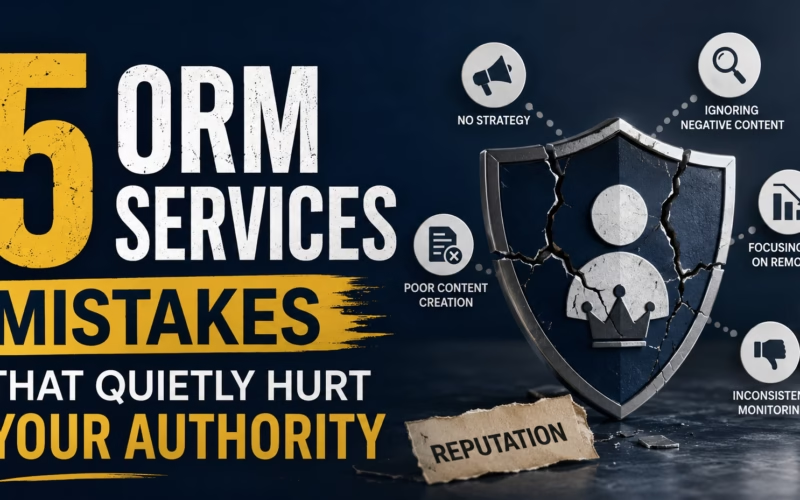
Here are five ORM services mistakes that quietly hurt authority and what businesses can do to avoid them.
Why Authority Matters in Online Reputation Management
Before discussing the mistakes, it is important to understand why authority matters.
Authority is more than visibility. It is the level of trust people place in your business based on what they see online. A company with strong authority appears reliable, knowledgeable, and credible across multiple channels.
When authority is high:
- Customers trust recommendations.
- Search engines view the brand as credible.
- Industry peers recognize expertise.
- Conversion rates often improve.
- Customer loyalty becomes stronger.
When authority declines, even excellent products and services may struggle to gain traction.
This is why ORM should focus not only on managing perception but also on building lasting trust.
1: Focusing Only on Negative Content Removal
One of the biggest misconceptions about ORM is that it revolves entirely around removing negative content.
Many businesses believe that reputation management begins and ends with pushing down unfavorable reviews, comments, or articles. While addressing negative content can be important, treating ORM as a damage-control tool alone often creates larger problems.
A reputation cannot be built solely by hiding criticism.
Customers today are highly informed. They understand that no company is perfect. In fact, seeing a few reasonable negative reviews alongside positive feedback can actually increase trust because it makes the overall profile appear more authentic.
Businesses that focus exclusively on suppression often neglect the positive content that builds authority.
A stronger approach involves:
- Publishing valuable content
- Sharing customer success stories
- Building thought leadership
- Highlighting expertise
- Encouraging genuine reviews
Authority grows when positive signals outweigh negative ones naturally.
The goal should be creating a stronger reputation rather than simply covering up weaknesses.
2: Ignoring Review Responses
Many companies invest heavily in collecting reviews but fail to engage with them afterward.
This silent mistake can significantly impact authority.
When potential customers read reviews, they often pay close attention to how businesses respond. A thoughtful response demonstrates professionalism, accountability, and customer care.
Unfortunately, some brands:
- Ignore reviews completely
- Respond defensively
- Use generic copy-and-paste replies
- Take excessive time to address concerns
These behaviors can create the impression that customer feedback is not valued.
Even positive reviews deserve acknowledgment.
For example, a simple personalized thank-you message can reinforce customer relationships and encourage future engagement.
Negative reviews require even more attention. Responding professionally and constructively can often transform a negative situation into a positive brand impression.
Consumers understand that mistakes happen. What matters is how a company handles them.
A responsive business often appears more trustworthy than one with a flawless but silent review profile.
3: Creating Artificial Positivity
Another common ORM mistake is attempting to manufacture a perfect reputation.
Some businesses become overly focused on appearing flawless. They may encourage only positive feedback, suppress authentic criticism, or create content that feels overly promotional. While ORM services are designed to help businesses manage their online reputation, relying on overly controlled messaging can make a brand appear less authentic and reduce audience trust over time.
The result is often the opposite of what they intended.
Modern audiences are skilled at identifying inauthentic messaging. A reputation profile that appears unrealistically perfect can raise suspicion rather than trust.
People expect balance.
Authenticity is one of the strongest drivers of authority in today’s digital environment.
A healthy reputation includes:
- Honest customer experiences
- Genuine testimonials
- Real conversations
- Constructive feedback
- Transparent communication
Instead of chasing perfection, businesses should focus on credibility.
Credibility comes from demonstrating consistency, expertise, and integrity over time.
An authentic reputation is far more persuasive than an artificially polished one.
4: Neglecting Search Visibility
Many organizations think of ORM primarily as review management.
However, reputation extends far beyond review platforms.
When someone searches for a company online, the search results themselves become part of the reputation experience.
Potential customers often evaluate:
- Website content
- News mentions
- Industry articles
- Social media profiles
- Blog posts
- Business listings
If these search results are outdated, incomplete, or inconsistent, authority may suffer.
For example, a business may have excellent customer reviews but outdated website information, inactive social profiles, and limited authoritative content.
This creates a fragmented digital presence.
Strong ORM services integrate reputation management with search visibility strategies.
This includes:
- Maintaining updated profiles
- Publishing high-quality content
- Building authoritative mentions
- Optimizing branded search results
- Strengthening digital credibility signals
The more complete and consistent your online presence becomes, the stronger your authority appears.
A well-managed search presence often serves as a silent trust builder for potential customers.
5: Treating ORM as a One-Time Project
Perhaps the most damaging mistake is viewing reputation management as a temporary task.
Some businesses invest in ORM services after experiencing a public issue, negative review trend, or online criticism. Once the immediate concern fades, they stop monitoring their reputation.
This approach overlooks an important reality.
Reputation is constantly evolving.
Every review, social media mention, customer interaction, and online discussion contributes to how people perceive a brand.
Authority requires ongoing attention.
A successful ORM strategy should include:
Continuous Monitoring
Track brand mentions across platforms regularly.
Consistent Content Creation
Publish valuable content that reinforces expertise.
Active Customer Engagement
Respond to reviews, comments, and feedback.
Reputation Audits
Evaluate how your brand appears in search results and online discussions.
Performance Analysis
Measure sentiment trends and identify emerging opportunities or risks.
Businesses that treat ORM as an ongoing process typically develop stronger authority than those that only react to problems.
The Hidden Cost of Weak ORM Practices
Many reputation mistakes do not create immediate consequences.
Instead, they gradually weaken public perception.
The effects may include:
- Reduced customer trust
- Lower conversion rates
- Increased skepticism
- Lost business opportunities
- Declining brand credibility
- Difficulty attracting new customers
Because these issues develop slowly, businesses often fail to recognize the connection between weak ORM practices and declining authority.
A reputation rarely collapses overnight.
More often, authority erodes through small, overlooked mistakes repeated consistently over time.
Building Authority Through Smarter ORM Strategies
Businesses seeking stronger authority should focus on proactive reputation management rather than reactive problem-solving.
Effective ORM strategies often include:
Prioritizing Transparency
Open communication builds trust faster than polished marketing messages.
Encouraging Genuine Reviews
Authentic customer experiences provide valuable credibility.
Producing Helpful Content
Educational and informative content positions brands as trusted resources.
Engaging With Communities
Meaningful participation in online discussions strengthens visibility and trust.
Maintaining Consistency
Consistency across platforms reinforces brand reliability.
Authority grows when every customer touchpoint supports a positive and authentic experience.
Looking Beyond Reputation Scores
Many businesses become fixated on ratings, review counts, and sentiment percentages.
While these metrics matter, authority involves more than numbers.
True authority reflects how people feel about a brand when they encounter it online.
Questions worth asking include:
- Does the brand appear trustworthy?
- Is expertise clearly demonstrated?
- Are customer concerns addressed professionally?
- Does the company contribute meaningful value?
- Is communication transparent and authentic?
The answers to these questions often influence purchasing decisions more than reputation metrics alone.
Conclusion
Online reputation management plays a critical role in shaping how businesses are perceived, but not all ORM strategies strengthen authority. In many cases, seemingly harmless mistakes quietly undermine trust and reduce credibility over time.
Focusing solely on negative content removal, ignoring review engagement, creating artificial positivity, neglecting search visibility, and treating ORM as a short-term project can all weaken a brand’s authority.
The strongest reputations are built through authenticity, consistency, transparency, and long-term commitment. Businesses that approach ORM as an ongoing trust-building process are far more likely to earn lasting credibility and stronger relationships with their audiences.
In an increasingly connected digital world, authority is not built by controlling every conversation. It is built by showing up consistently, providing value, and earning trust one interaction at a time.
